

Here’s the right way to approach AI in EMEA
Michael Rooney on how to determine how to thoughtfully implement AI in Europe.
%20Large%20Large%20Medium.jpeg)
There's a perception, particularly from across the Atlantic, that European enterprises are "behind" on AI adoption. Allow me to push back on that.
What I see in my conversations with procurement leaders across the UK, Germany, the Nordics, and beyond is a sense that these tools are powerful, useful, but a need to be deliberate. And in a region shaped by GDPR, the EU AI Act, and a regulatory environment that takes data governance seriously, deliberation is exactly the right posture.
European enterprises are eager for new tools to help solve core problems, while also asking important questions about how to adopt AI responsibly without exposing ourselves to unnecessary risk.
Let me see if I can answer these important questions.
The case for controlled pilots
The challenge with AI in procurement is that many find its promises… uncertain. Leaders I speak with worry about data exposure, commpliance implications, and the operational risk of deploying something they don't fully control.
These are valid concerns. But they're also solvable, assuming you start in the right place.
The most successful AI deployments I've seen in European enterprises share a common trait: they begin with tightly scoped pilots that deliver measurable value without requiring sensitive data or deep system integration. They prove the concept in a controlled environment before expanding.
This is a solid strategy. It's one that aligns with how European businesses have always approached technology adoption, which is to say thoughtfully, with governance built in from the start.
What makes an AI pilot "low risk"?
Not all AI use cases carry the same risk profile. When evaluating where to start, I encourage procurement leaders to consider four questions:
1. What data does it need? Some AI agents require access to sensitive internal data or proprietary models. Others work with documents you're already sharing externally, like contracts, order forms, supplier information. The latter is a safer starting point.
2. What decisions does it make? There's a difference between AI that automates a decision and AI that informs one. Agents that surface insights, flag exceptions, or generate recommendations, while leaving the final call to a human, fit more naturally into existing governance frameworks.
3. How quickly can we measure results? The best pilots deliver observable outcomes within days or weeks, not months. That fast feedback loop makes it easier to build internal confidence (or course-correct if needed).
4. What's the commercial commitment? The best pilots let you prove value before signing a long-term contract. Look for vendors who offer tightly scoped pilots with clear success criteria, so you can validate ROI on your terms before scaling spend. Tight control on scope means tight control on risk.
When you filter for these criteria, you find a set of use cases that are genuinely low-friction, pilots that even the most cautious organisation can run without compromising on compliance or control.
Where European enterprises are starting out
The pilots gaining traction are driven by familiar business problems that procurement teams have struggled to solve at scale. These are pain points we hear in nearly every conversation:
"We waste hours chasing requesters to fix incomplete or mismatched submissions."
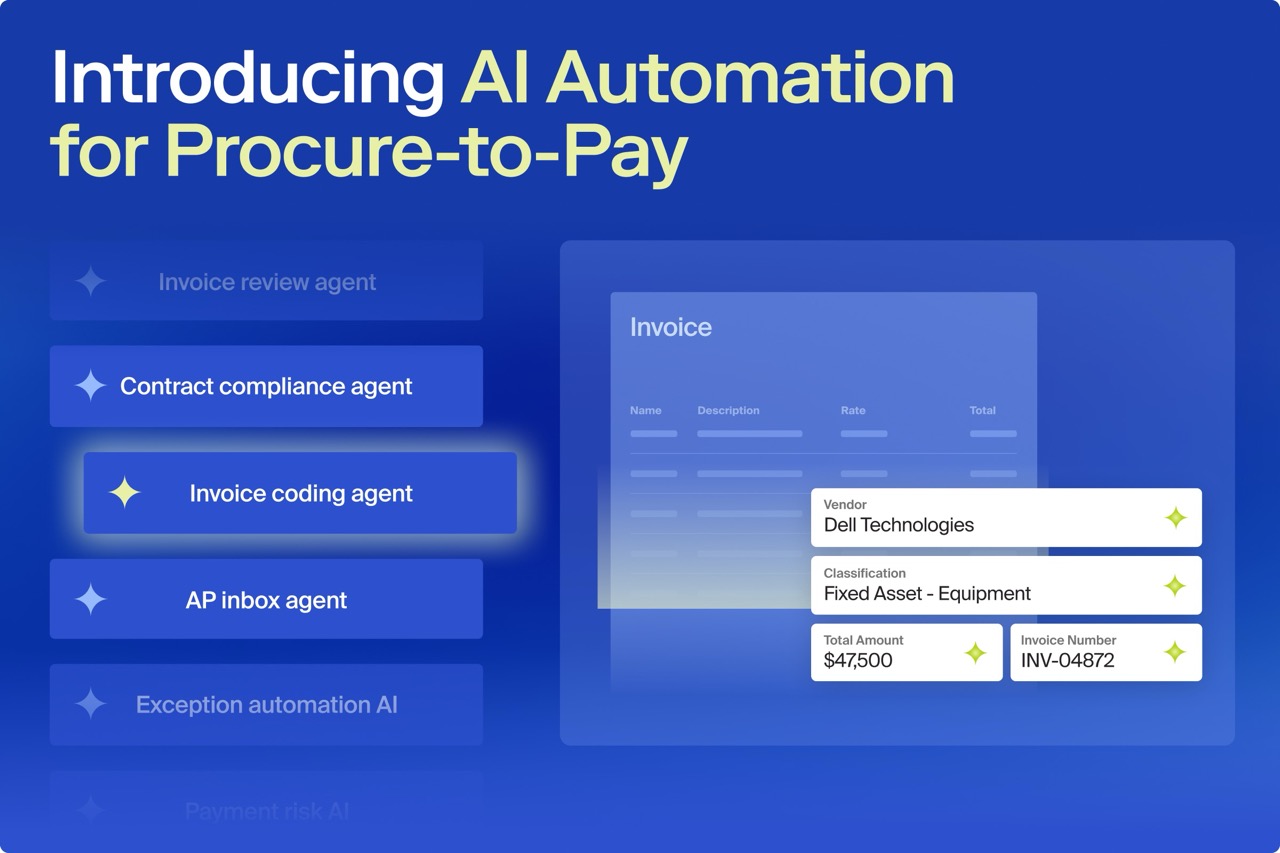
Intake validation agents automatically check purchase requests against supporting documents and policy rules, catching errors at the source before they ripple downstream. No sensitive data beyond what's already in the request, and immediate time savings.
"Duplicate supplier records keep polluting our data, and manual checks can't keep up."
AI flags inconsistent or duplicate records before they enter the system faster and more consistently than any manual process. This is a data hygiene problem every enterprise faces, and it's an ideal starting point because the inputs are simple and the results are immediately visible.
"Renewals come in and we're never sure what actually changed from the original terms."
Contract comparison agents analyse renewal terms against original agreements, surfacing changes in pricing, scope, or language. Legal and procurement teams get a structured summary without needing to integrate AI into the contract management system itself.
"DPA and MSA reviews are a bottleneck, but we can't afford to cut corners on GDPR."
Compliance agents scan agreements against internal policies and regulatory requirements like GDPR, accelerating the review while keeping the final decision with your team. For European enterprises, this isn't optional. You have to do it.
But these really are practical, bounded applications of AI that solve real problems, and they're designed to work within the governance structures European enterprises already have in place. It's a match made in procurement heaven.
Moving forward without moving fast
There's a reason "move fast and break things" never resonated in European business culture. Stability, accountability, and long-term thinking are in many ways our competitive advantages. Our companies are built to last, which is why any new technology is worth taking a deeper look before diving in.
The opportunity with AI requires us to apply this mindset, while also thoughtfully testing to find what short-term wins we can take advantage of. Start with a pilot that fits your risk tolerance. Measure the results, build confidence internally, and then expand.
The companies I work with aren't actually racing to deploy AI everywhere. What they're doing is being selective about where to start, and that selectivity is exactly what sets them up for sustainable success.
If you're evaluating where to begin, we've put together a guide outlining five specific AI pilots that can be deployed in days, with minimal data requirements and clear, measurable outcomes. It's a practical starting point for procurement leaders who want to move forward, thoughtfully.






.webp)




AI procurement orchestration, from intake to pay
Enter your business email to keep reading
