
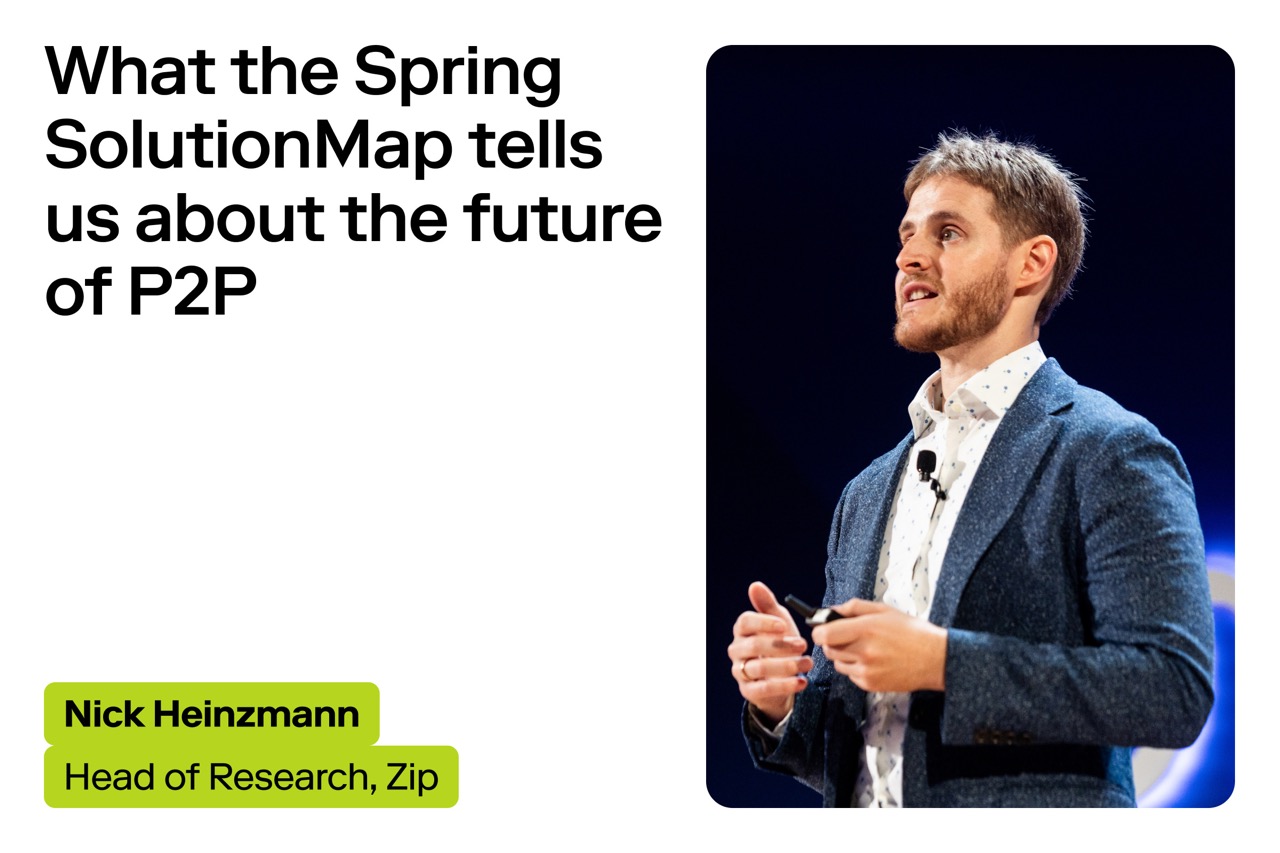
What the Spring SolutionMap tells us about the future of P2P
Why orchestration is the foundation for AI-powered procure-to-pay.

When Zip was named a Visionary in the Gartner Magic Quadrant for Source-to-Pay Suites earlier this year, I argued that the future of source-to-pay would be built on orchestration rather than monolithic suites. The platforms that win the next decade will be the ones that can connect the entire procurement lifecycle and adapt as the business changes.
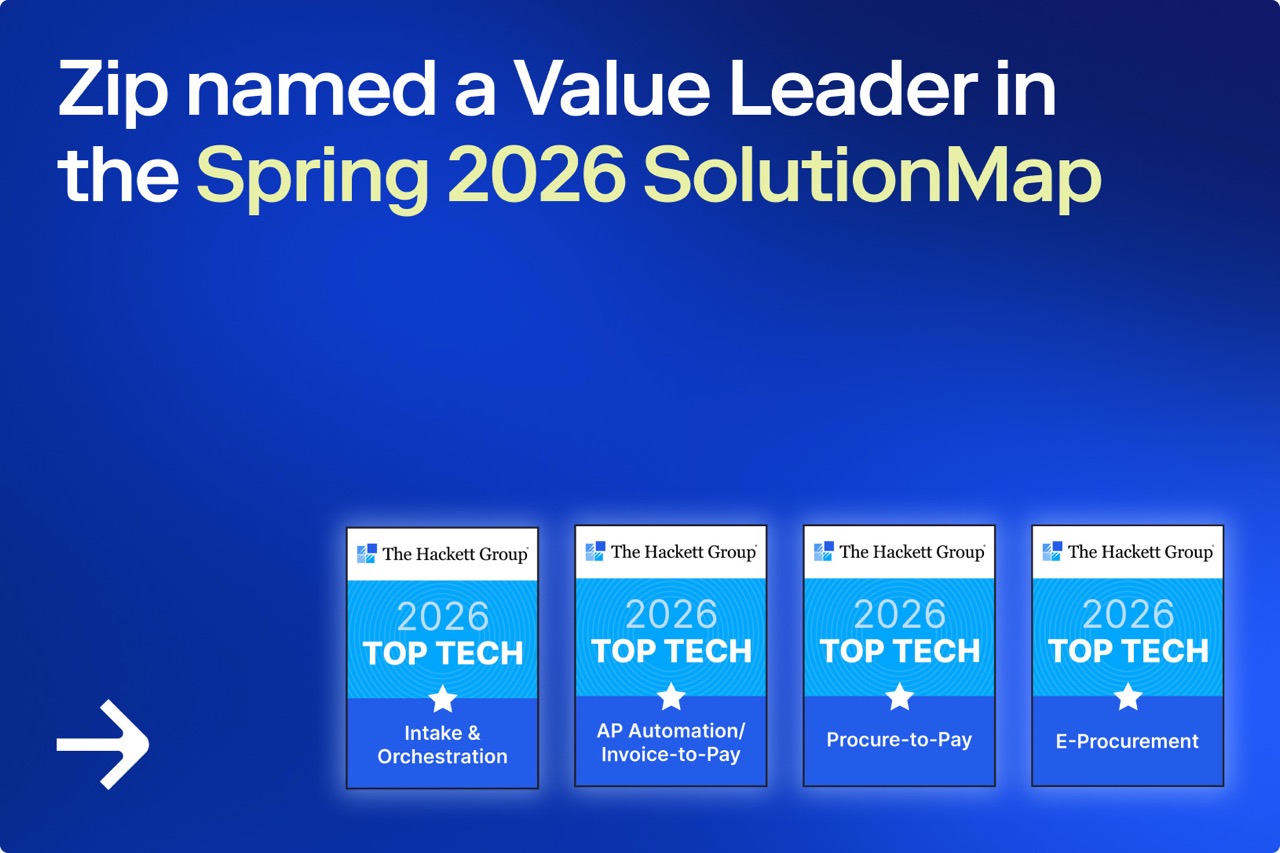
The Hackett Group's Spring 2026 SolutionMap (the assessment formerly run under the Spend Matters brand) is independent validation of that thesis.
Three years of intake and orchestration leadership
This is the third consecutive SolutionMap in which Zip has received the highest capability scores for functional depth in intake and orchestration. Three times in a row, against a field of 118 vendors, evaluated against 100+ detailed capability criteria, with mandatory product demonstrations.
That kind of consistency is the result of years of focused investment in the foundational layer that modern procurement actually runs on: a system of record for every request, approval, stakeholder, and integration. When The Hackett Group analysts confirm this level of leadership three cycles running, we can take that as proof the intake and orchestration category is maturing rapidly, and maintaining a leadership position requires deep investment in platform, integration and AI capabilities.
Why orchestration is the foundation for next-generation P2P
Conventional wisdom has put orchestration platforms and P2P suites in different categories: orchestration sits on top, P2P executes underneath. The SolutionMap results suggest something different. Orchestration platforms should run the entire process end-to-end. Orchestration is the foundation for the next generation of procure-to-pay, powered by AI.
There are two reasons this matters.
True orchestration runs end-to-end, and that's where AI gets traction. AI agents are only as effective as the process context they operate in. A platform that already models the full P2P process end-to-end, with the data, integrations, and workflow logic intact, is the right place to deploy agents that can take meaningful action. If a system only "orchestrates" the front end and hands off to disconnected tools downstream, it's a fancy intake form, and AI deployed on top of it inherits every gap in the handoff. Real orchestration means one platform, one data model, one set of rules governing the full procure-to-pay lifecycle. That's also where AI agents have room to do real work.
Zip entered P2P three years ago and is already enterprise-grade. Most vendors take a decade to build a credible P2P suite. We delivered one in a fraction of that time and earned Value Leader recognition on first entry into the SolutionMap, because the orchestration foundation we built first made everything else faster, more coherent, and more extensible. This is not a point tool expanding into an adjacent category. It's a platform architecture strong enough that the "adjacent category" becomes a natural extension of what the platform already does well.
Where this leaves procurement leaders
We're entering a period where AI is going to reshape procure-to-pay faster than most organizations are prepared for. Agentic workflows, automated exception handling, intelligent routing, dynamic approval logic—the capabilities that felt like a future-state a year ago are all showing up in procurement roadmaps this year.
The platforms that will execute on that future are the ones with the orchestration, data, and integration fabric to support it. That's the thesis we've been building toward since the Gartner MQ, and it's the thesis SolutionMap just independently validated.
For procurement leaders building their next technology roadmap, the SolutionMap results are worth reading carefully.
%20Large.jpeg)







.webp)




AI procurement orchestration, from intake to pay
Enter your business email to keep reading
