
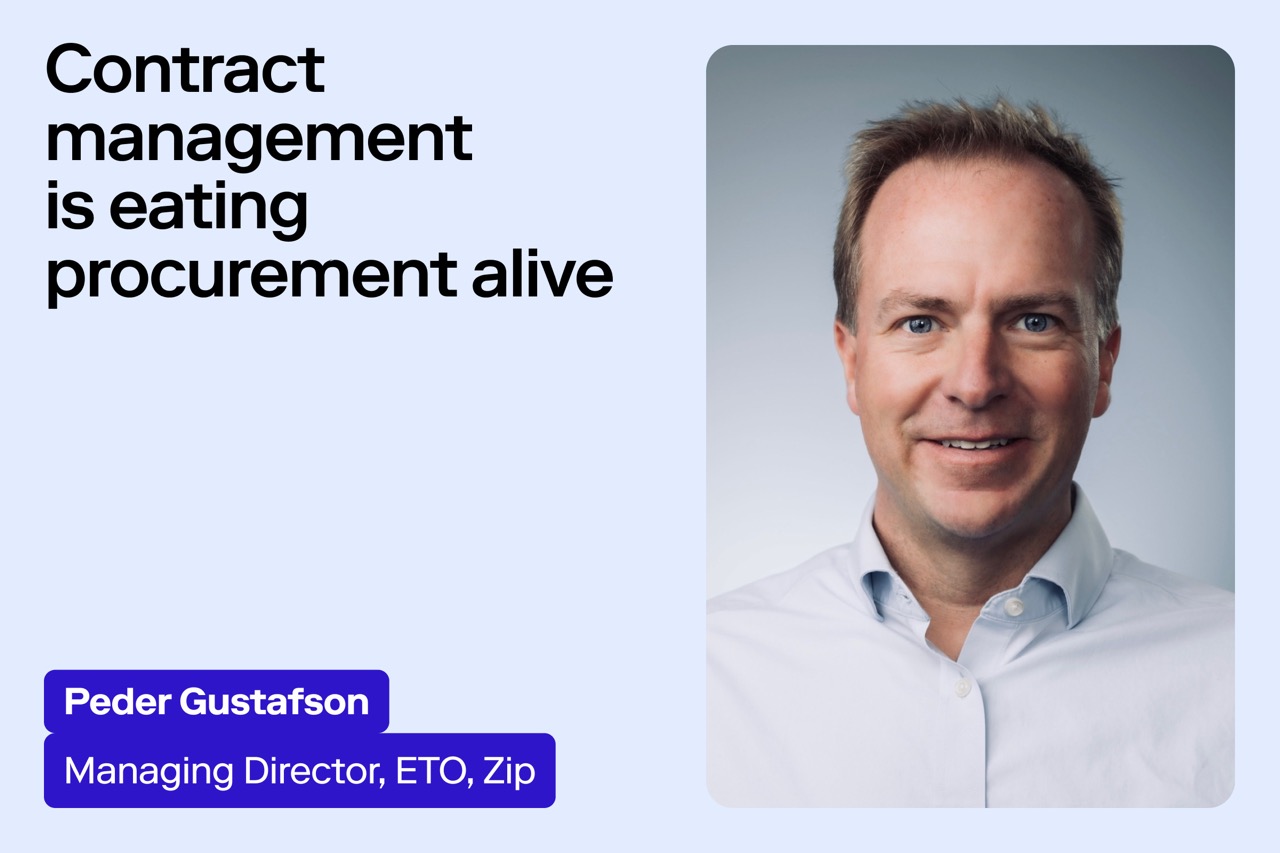
Contract management is eating procurement alive
How AI contract orchestration can finally free your team to do strategic work.

When I was leading procurement as a CPO, I had a daily routine.
At the end of the day, I would make rounds in the office to see if anyone was still there, ask how their day went, and check if they needed any support. This wasn't to monitor anyone, it was simply to ensure we operated as a team and never left anyone feeling alone. My goal was always to be the last one out.
But many nights, I wasn't. One of my colleagues routinely stayed in the office deep into the evening. With multiple monitors on her desk, she would scan her eyes back and forth, comparing dense contract language and manually redlining clauses while consulting the static contracting playbook authored by our legal team. It was tedious but important work, and for this person, nothing short of perfection was acceptable.
"You should be home. We can tackle this in the morning," I'd tell her. "The supplier won't be reading this tonight." She'd smile, but she never took it as a cue to leave.
Why are procurement's best performers stuck doing manual contract work?
Her long hours were not an indicator of her job proficiency—she was a high performer. Unfortunately, our disjointed tool set, outdated processes, and underinvestment in the function resulted in requiring the team to focus on low-value, high-effort work that was necessary to protect the company and support the business. This came at the expense of engaging in a more meaningful and strategic manner.
That was in 2018, and sadly, this is still how procurement contracting is managed inside some of the world's most recognized organizations today.
Not broken, exactly. Just brutally, achingly manual.
The contract questions procurement needs to be able to answer
Everyone in procurement has experienced some version of a burning platform moment, or a new leader engaging procurement saying: "Tell me everything I need to know about our contractual obligations with a specific supplier, category, or division of the business."
Suddenly, everyone is scrambling.
How many active contracts do we have? What's the spend in that category? By requester? Where do we have fragmentation? How tightly managed are we, really? Which contracts are coming up for renewal this quarter? And which of those should we actually be renegotiating instead of rubber-stamping?
These are fair questions, ones I've been asked, and ones I've asked of my own teams.
But the answers often require gymnastics: digging through multiple systems, consolidating data across different formats and departments, and assembling a picture that should readily exist but doesn't.
And that's before you even get to the hard stuff.
How does poor contract data create operational risk?
When a company decides to divest a portion of its business, the transition often requires a period of services between the selling and acquiring entities. The first question is deceptively simple: which contracts does that part of the business use?
Maybe they need to keep using the parent company's collaboration software agreement for the next 12 months until they migrate to their own. Or perhaps there are dozens of supplier relationships that must be untangled, reassigned, or renegotiated. Knowing which contracts are affected determines whether a divestiture moves forward smoothly or creates ongoing support requirements for both parties.
In most organizations, answering that question means someone—often several someones—manually tracing the connections between purchase orders, suppliers, legal entities, and contract terms. It's painstaking, and it's slow.
Here’s why the manual negotiation process breaks down
The main issue here is that, increasingly, procurement teams are relied upon for negotiating legal terms within predetermined guide rails.
Expertise to create those guide rails is expensive. To drive efficiencies, a set of pre-approved clauses and fallback positions is created—a playbook—which is handed to procurement. If a supplier redlines a clause, the procurement team consults the playbook, applies the next approved fallback provision, and only escalates to legal when they run out of options or encounter a “third-rail” provision they are not authorized to negotiate.
When I think of a playbook, my mind immediately goes to a quarterback. Imagine if, for every "X" and "O" in a given play, the quarterback had to stop, look down at the play card, and only then proceed to run each step in isolation. Not only would the game be painfully boring, but the opposing team would steamroll them.
The playbook approach works, but when performed manually, it's slow and prevents procurement professionals from operating at the highest end of their capabilities. The manual application of that practice ultimately leads to inconsistency.
And when a contract lands on a lawyer's desk for review, it often arrives without context, accompanied by a note that simply reads: "please review."
My father-in-law is a corporate attorney, and one of his mantras is: "Words and context matter." Without that, legal support becomes very difficult.
With an orchestrated contracting process, procurement can become a more effective partner, almost an extension to the legal team: here's what the supplier pushed back on and why, here's the fallback position we recommend and why.
With outdated tools and broken data foundations, building that summary for every contract, every redline, and every clause takes time that most procurement teams do not have.
What changes when the manual work disappears
There's a cliché in procurement that everyone is tired of hearing: "We want to move from reactive and tactical to proactive and strategic." I've heard it a thousand times, but I've rarely seen anyone actually cross that bridge.
It's like Mark Twain's quip that "everybody talks about the weather, but nobody does anything about it."
We're now seeing procurement technology finally catch up to the aspiration. When AI can handle redlining, clause comparison, playbook application, renewal tracking, and data consolidation, a tangible shift in the work becomes possible.
When that happens, procurement professionals can reclaim time to invest in supplier development, category strategy, and deeper business partnerships; the work they always knew was necessary to become truly strategic, but were restricted from doing because of manual, process-related work.
This is an exciting time, and organizations must be ready to become AI-forward to drive strategic change. Internal business customers are beginning to view this as a baseline expectation, and the race for top talent demands this level of sophistication.
The highest-performing procurement teams are already using automation to unlock team capacity and drive the next level of value back into the business.







%20Large.jpeg)


.webp)


AI procurement orchestration, from intake to pay
Enter your business email to keep reading
